
 English


Views: 0 Author: Site Editor Publish Time: 2026-02-19 Origin: Site


In industrial wood construction, structural stability is the foundation of safety, durability, and long-term performance. Whether used in pallet manufacturing, timber framing, packaging crates, or prefabricated wooden components, fastening methods directly influence the strength and reliability of the final structure. Among the many fastening solutions available, round wire nails remain one of the most widely used and trusted options—especially for large-scale industrial applications and round wire nails wholesale export markets.
At Shanghai Foreign Trade (Pudong) Co., Ltd., we work closely with factories, distributors, and construction material buyers worldwide to supply round wire nails that meet industrial standards for strength, consistency, and cost efficiency. In this article, we explore how round wire nails improve structural stability in wood construction, why they continue to be preferred in industrial settings, and what buyers should consider when sourcing them for wholesale export.
Round wire nails are manufactured from steel wire that is cut and formed into a cylindrical shaft with a pointed tip and a flat or slightly domed head. Their round cross-section provides uniform strength along the entire length of the nail, allowing for predictable performance in wood fastening applications.
These nails are commonly produced in various diameters, lengths, and surface finishes, making them suitable for a wide range of industrial uses. Because of their standardized production process, round wire nails are ideal for wholesale export, where consistency and large-volume supply are critical.
In wood construction, structural stability refers to the ability of joints and assemblies to withstand loads, vibrations, environmental changes, and long-term stress without loosening or failing. It is one of the most critical performance factors in both permanent and temporary wooden structures. Whether the application involves pallets, crates, formwork, or prefabricated timber components, the integrity of each joint directly influences the safety, durability, and service life of the finished product.
Poor fastening can compromise stability and lead to a range of operational and safety issues, including:
Joint separation, where fasteners gradually loosen and structural connections weaken
Reduced load-bearing capacity, making structures unable to handle expected weight or pressure
Increased maintenance costs, due to frequent repairs or replacements
Safety risks, particularly in industrial environments where structural failure can result in injuries or equipment damage
For industrial wood products—such as pallets, crates, formwork, and framing components—stable fastening ensures that structures maintain their integrity during handling, transportation, and long-term use. In global logistics, where wooden packaging is exposed to vibration, stacking pressure, and varying environmental conditions, reliable fastening is not just a quality issue—it is a business necessity.
The cylindrical shape of round wire nails allows for even stress distribution along the nail shaft when driven into wood. Unlike irregular or angular fasteners, round wire nails minimize localized stress concentrations that could cause cracking or splitting of wooden components.
When a nail is driven into timber, the surrounding wood fibers compress evenly around the smooth, round shaft. This uniform compression distributes forces more consistently across the joint, reducing the likelihood of micro-fractures or fiber tearing.
Round wire nails interact efficiently with wood fibers to create friction-based holding strength. When driven into timber, the surrounding fibers compress tightly around the nail shaft, forming a strong mechanical grip.
This characteristic makes round wire nails particularly effective for applications such as:
Pallet assembly
Crate and box manufacturing
Timber frameworks
Industrial packaging structures
The frictional resistance generated by this fiber compression prevents the nail from loosening or backing out under operational stress. As a result, joints remain stable even when exposed to vibration, load shifts, or repeated handling.
In industrial wood construction, minimizing material waste is essential for both cost control and production efficiency. The smooth, round profile of wire nails significantly reduces the likelihood of splitting, especially when fastened near edges or ends of wooden components.
Unlike square or irregular fasteners, round wire nails displace wood fibers gradually and evenly during insertion. This controlled displacement reduces internal stress buildup within the timber, preventing cracks and fractures.
Round wire nails are widely used in automated nailing systems, which are common in industrial wood manufacturing. Their consistent shape, diameter, and length allow for reliable feeding through pneumatic and mechanical nail guns.
This compatibility ensures:
Consistent penetration depth, improving joint uniformity
Uniform joint strength, enhancing product reliability
Faster production cycles, increasing manufacturing throughput
Reduced error rates, minimizing machine jams and misfires
For factories involved in large-scale wood construction or packaging, this consistency is a major advantage. Automated production lines depend on standardized fasteners to maintain speed, accuracy, and quality control.
By using round wire nails, manufacturers can achieve greater operational efficiency while maintaining high structural performance standards.
Wood structures often experience vibration during transportation, storage, and use. Export pallets, shipping crates, and industrial containers are regularly exposed to mechanical shocks, stacking pressure, and dynamic loads.
Round wire nails provide stable fastening that resists backing out under vibration, especially when used with appropriate nail length and diameter. Their friction-based holding mechanism and uniform load distribution help joints remain secure even under repeated movement.
This makes them ideal for:
Export pallets
Shipping crates
Industrial containers
Temporary construction frameworks
In logistics-heavy industries, where wooden structures must survive long-distance transport and repeated handling, this vibration resistance is a critical performance advantage.
Round wire nails are widely used across multiple industrial sectors due to their reliability and versatility.
Pallets and crates require fasteners that can handle repeated loading, stacking, and transport. Round wire nails provide the strength needed while remaining cost-effective for mass production.
In prefabricated wood components, round wire nails ensure joints remain stable during handling and assembly.
Temporary wooden formwork used in concrete casting benefits from nails that are easy to drive, secure, and remove without excessive wood damage.
Fastener Type | Structural Stability | Risk of Splitting | Automation Friendly | Cost Efficiency |
Round Wire Nails | High | Low | High | High |
Square Nails | Moderate | Higher | Low | Moderate |
Screws | Very High | Low | Moderate | Low |
Staples | Low | Low | High | High |
This comparison highlights why round wire nails remain a preferred choice for industrial wood construction and wholesale export markets.
The surface finish of round wire nails also influences performance and longevity.
Bright Finish: Suitable for indoor applications with controlled environments.
Galvanized: Offers corrosion resistance for outdoor or humid conditions.
Electro-Galvanized: Provides moderate corrosion protection with a smooth surface.
Choosing the right finish ensures structural stability is maintained throughout the product’s lifecycle.
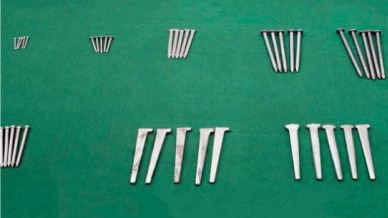
For international buyers, consistency is critical. Round wire nails manufactured for wholesale export follow standardized specifications, ensuring predictable performance.
Compared to alternative fasteners, round wire nails offer excellent strength-to-cost efficiency, making them ideal for large-scale industrial procurement.
Round wire nails are widely accepted across global markets and can be produced to meet various international quality and packaging requirements.
Industrial buyers should evaluate:
Steel grade and tensile strength
Nail diameter and length accuracy
Surface finish quality
Packaging for export logistics
Production capacity and lead times
At Shanghai Foreign Trade (Pudong) Co., Ltd., we ensure that round wire nails supplied for wholesale export meet these criteria, supporting stable and efficient industrial operations.
Round wire nails play a crucial role in improving structural stability in wood construction. Their uniform shape, strong holding power, low splitting risk, and compatibility with automated production make them indispensable for industrial applications. For factories and distributors sourcing round wire nails wholesale export, these advantages translate into reliable performance, reduced material waste, and long-term cost savings.
At Shanghai Foreign Trade (Pudong) Co., Ltd., we are committed to supplying high-quality round wire nails that meet the demands of global industrial markets. If you are looking for a dependable partner for wholesale export of round wire nails, we welcome you to contact us for more information and tailored solutions.
1. Why are round wire nails commonly used in wood construction?
They provide strong holding power, even stress distribution, and reduced wood splitting.
2. Are round wire nails suitable for automated production lines?
Yes, their consistent shape makes them ideal for pneumatic and mechanical nailing systems.
3. What surface finishes are available for round wire nails?
Common finishes include bright, galvanized, and electro-galvanized.
4. Are round wire nails suitable for wholesale export?
Yes, they are widely used in international markets due to standardized production and cost efficiency.
