
 English


Views: 0 Author: Site Editor Publish Time: 2026-02-10 Origin: Site


In industrial manufacturing, construction, and global trade, fasteners play a far more critical role than many people realize. Among the most widely used and trusted fasteners worldwide are round wire nails. Their simple design, reliable performance, and cost efficiency make them a staple product across multiple industries. For factories involved in large-scale procurement or international sourcing, round wire nails wholesale export represents a stable, high-demand category with consistent global consumption.
Round wire nails are used in everything from structural framing and furniture assembly to packaging and general carpentry. Because of their versatility, standardized production, and wide compatibility with different materials, they remain one of the most exported fasteners in the global hardware market. In this article, we explore what round wire nails are, how they are manufactured, and where they are most commonly used across industrial and commercial sectors.
Round wire nails are metal fasteners manufactured from drawn steel wire and shaped into a straight shank with a pointed tip and a formed head. Unlike specialized nails with unique geometries, round wire nails feature a simple cylindrical profile that provides consistent penetration and holding power.
They are typically produced in carbon steel, though galvanized and stainless-steel variants are also available for corrosion-resistant applications. Because of their standardized shape and dimensions, round wire nails are easy to mass-produce and suitable for automated nailing equipment.
Feature | Description |
Shank Shape | Cylindrical, uniform diameter |
Material | Low- or medium-carbon steel, stainless steel |
Head Type | Flat, oval, or checkered |
Surface Finish | Bright, galvanized, black, or polished |
Manufacturing Form | Machine-cut and machine-headed |
These nails are valued for their balanced strength, consistent sizing, and ease of handling, making them ideal for round wire nails wholesale export into industrial supply chains.
The production of round wire nails follows a streamlined and highly automated industrial process designed to ensure dimensional accuracy, mechanical strength, and consistent surface quality. This standardized workflow enables manufacturers to meet the strict volume, performance, and regulatory demands associated with round wire nails wholesale export.
Wire Drawing
The process begins with high-quality steel wire rods, typically produced from low- or medium-carbon steel. These rods are passed through a series of drawing dies to reduce their diameter to the exact specification required for nail production. This step is critical because wire uniformity directly affects nail strength, penetration ability, and head formation quality. Precise wire drawing ensures consistent tensile strength and prevents weak points along the shank.
Straightening and Cutting
Once drawn to the desired diameter, the wire is mechanically straightened to eliminate curvature or deformation. It is then cut into uniform lengths corresponding to specific nail sizes. Accurate cutting is essential for maintaining length tolerances, especially for large-scale industrial orders where thousands of nails must match exact dimensional requirements.
Pointing and Heading
In this stage, one end of each wire segment is sharpened into a pointed tip, while the opposite end is formed into a head using high-speed heading machines. The head shape may vary—flat, oval, or checkered—depending on application needs. Proper head formation ensures secure fastening and prevents pull-through during use.
Surface Treatment
After shaping, nails undergo surface finishing to improve corrosion resistance, appearance, and application suitability. Depending on customer requirements and environmental exposure conditions, surface treatments may include galvanization, polishing, black oxide coating, or stainless-steel fabrication. These treatments significantly influence durability, especially for outdoor and industrial applications.
Sorting and Packaging
Finished nails are inspected for dimensional accuracy, surface defects, and head integrity. Quality control systems automatically sort nails into size categories and package them in standardized export formats such as cartons, woven bags, or palletized bulk loads. Proper packaging minimizes damage during transportation and ensures compliance with international logistics standards.
Finish Type | Function | Application Use |
Bright Finish | Clean appearance | Interior carpentry |
Galvanized | Corrosion resistance | Outdoor construction |
Black Oxide | Reduced glare, basic protection | Industrial framing |
Stainless Steel | Maximum corrosion resistance | Coastal or humid environments |
For buyers sourcing through round wire nails wholesale export, consistency in manufacturing processes ensures predictable performance, stable quality across batches, and smooth regulatory compliance. High-volume importers rely on standardized production to guarantee that every shipment meets the same technical and physical specifications, regardless of order size.
Round wire nails are manufactured in a broad range of sizes to accommodate different materials, load requirements, and application environments. Selecting the appropriate nail size is essential for ensuring structural integrity, ease of installation, and long-term durability.
Nail Length (mm) | Diameter (mm) | Common Use Case |
25–50 | 1.2–1.8 | Light carpentry |
60–90 | 2.0–2.8 | Furniture assembly |
100–150 | 3.0–4.0 | Structural framing |
160–200 | 4.5–6.0 | Heavy-duty construction |
Shorter nails with smaller diameters are typically used for lightweight applications such as paneling, decorative carpentry, and small furniture components. These nails provide sufficient holding power without causing material splitting or surface damage.
Medium-length nails are widely used in furniture manufacturing and packaging, where moderate structural support is required. Their balanced size allows for efficient penetration while maintaining joint stability.
Longer and thicker nails are designed for heavy-duty construction, framing, and industrial packaging. These nails provide high tensile strength and resistance to shear forces, making them suitable for load-bearing structures and export-grade wooden crates.
For international buyers involved in round wire nails wholesale export, several technical factors influence size selection:
Load Requirements – Heavier loads demand thicker shanks and longer lengths.
Material Type – Hardwoods require stronger nails than softwoods.
Environmental Exposure – Outdoor use requires corrosion-resistant coatings.
Installation Method – Pneumatic nailing systems require precise diameter tolerances.
In addition to dimensional specifications, industrial buyers often request:
Standardized packaging formats such as 20 kg cartons or jumbo woven bags
Palletized bulk loads for container shipping
Custom labeling for regional compliance
Moisture-resistant export packaging
By aligning size, finish, and packaging specifications with operational needs, factories and distributors can optimize procurement efficiency and reduce installation issues in downstream applications.
Because of their reliability and simplicity, round wire nails are used across a wide spectrum of industries.
Round wire nails are fundamental to:
Timber framing
Roofing structures
Wall panel assembly
Floorboard installation
Their uniform shank ensures stable penetration into wood without excessive splitting, making them suitable for both manual and pneumatic nailing systems.
In furniture production, round wire nails are widely used to secure:
Wooden frames
Upholstery bases
Drawer assemblies
Cabinet components
Their clean finish and predictable holding strength help ensure consistent product quality.
Industrial packaging relies heavily on round wire nails for:
Wooden crates
Shipping pallets
Export packaging frames
Because packaging must withstand long-distance transport, nails with consistent diameter and strength are essential.
From residential carpentry to industrial maintenance, round wire nails are a universal solution for:
Repairs
Temporary fixtures
DIY projects
Tool shop inventories
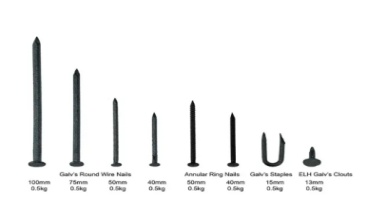
Round wire nails remain one of the most traded fasteners globally due to several practical advantages.
Advantage | Impact for Buyers |
Standardized Sizes | Easy compatibility with equipment |
Low Production Cost | Competitive pricing |
High Demand | Stable supply chain |
Easy Logistics | Simple packaging and handling |
Versatile Use | Broad industrial applicability |
For importers and industrial buyers, round wire nails wholesale export offers predictable sourcing, manageable lead times, and flexible volume scaling.
When sourcing round wire nails for export or industrial use, quality assurance is critical.
Wire grade and tensile strength
Dimensional accuracy
Head symmetry
Surface coating thickness
Corrosion resistance
Packaging integrity
Reputable exporters provide:
Batch traceability
Third-party inspection reports
Consistent packaging standards
These factors ensure smooth customs clearance and reliable end-use performance.
Round wire nails are exported worldwide for:
Infrastructure projects
Commercial construction
Furniture manufacturing hubs
Industrial packaging suppliers
Wholesale hardware distributors
Their adaptability to different regulatory and environmental conditions makes them one of the most globally accepted fasteners.
Round wire nails remain an indispensable fastener in modern industrial supply chains. Their simple design, cost efficiency, and versatility make them suitable for construction, furniture manufacturing, packaging, and general carpentry. For international buyers, round wire nails wholesale export represents a reliable sourcing category with stable demand and scalable production.
At Shanghai Foreign Trade (Pudong) Co., Ltd., we focus on delivering high-quality round wire nails that meet the performance, consistency, and packaging requirements of industrial buyers worldwide. Our experience in export-oriented manufacturing allows us to support factories and distributors seeking dependable fastener solutions.
If you are sourcing round wire nails for wholesale export or industrial use, we invite you to contact us to explore customized supply options that align with your operational and logistical needs.
1. What are round wire nails made from?
Round wire nails are typically manufactured from low- or medium-carbon steel, with optional galvanized or stainless-steel finishes for corrosion resistance.
2. What industries commonly use round wire nails?
They are widely used in construction, furniture manufacturing, industrial packaging, and general carpentry.
3. Why are round wire nails popular in wholesale export?
Their standardized design, low cost, versatile use, and high global demand make them ideal for wholesale export markets.
4. How do I choose the right round wire nails for my factory?
Consider application load requirements, environmental exposure, size specifications, surface finish, and packaging format.

